Keeping Your Outdoor Heaters Alive in the Rain and Mist
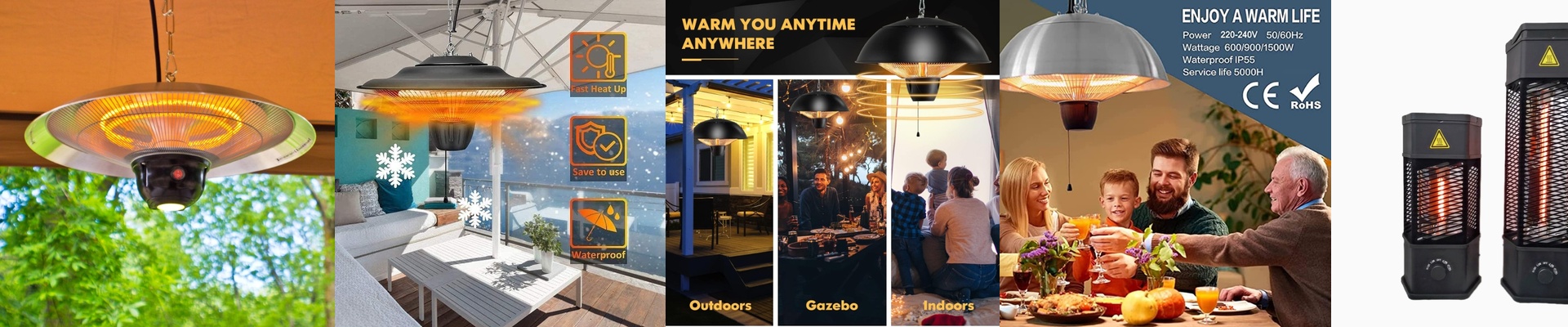
If you’ve ever run a bar or a patio, you know the struggle. Humidity, salt air, and the occasional sudden downpour are basically a death sentence for most heating elements. Most standard infrared lamps just can’t hack it. Moisture creeps into the electrical contacts, and before you know it, you’ve got a short circuit or a burnt-out filament. It’s frustrating. You buy a heater, and a few months later, it’s just a piece of expensive metal hanging from your ceiling.
Stopping the Leaks
We decided to fix this by focusing on the “leak points.” We use IP-rated housings, which is just a fancy way of saying we use gaskets and sealed cable entries to keep water out. Here’s the thing: the real danger isn’t usually the whole unit—it’s the junction points where the power cord hits the internal wiring. If water gets in there, the heater is toast within a single season. By sealing those specific spots, we make sure the electronics stay dry. If something eventually wears out, it’ll be a part you can actually replace, not a fried circuit board.
The “Silent Killer”: Condensation
Then there’s the mist. When a heater cools down on a damp night, moisture settles right on the quartz tube and the reflectors. It doesn’t look like much, but that thin layer of fog acts like a shield, scattering the heat instead of pushing it down toward your customers. To stop that, we use treated reflectors that shed water quickly. It keeps the heat focused and intense, even when the air feels like a sponge.
A Quick Warning on Airflow
Now, you might think, “Why not just seal the whole thing in plastic?” Well, that’s where it gets tricky. Tight seals stop water, but they also trap heat. If the unit can’t breathe, the internal transformer will overheat and pop. We’ve placed vents in spots where rain shouldn’t be able to reach them, but you’ve got to help us out. When you’re mounting the bracket,**don’t block those vents.**Trying to “extra-waterproof” the unit by covering the air holes is the fastest way to kill it. It’s a simple balance. Get the airflow right, keep the water out, and your heater lasts for thousands of hours instead of a few hundred. You get a machine that can take a beating from the weather and still keep your guests warm.