
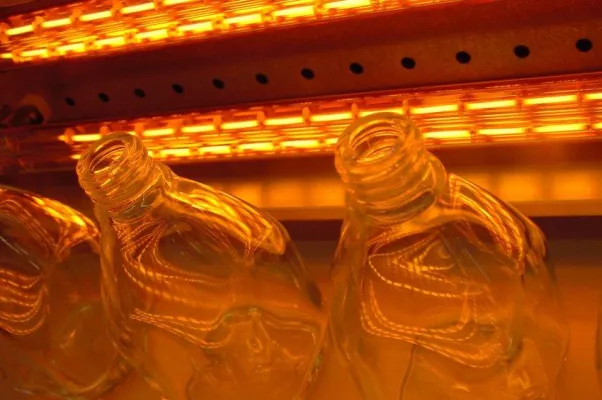
Squeezing High-Heat IR Into Mobile Glass Brackets
When you’re trying to fit a high-performance preheating system into a mobile glass repair bracket, you’re basically fighting a war over every single millimeter of space and every single volt of power. You can’t just take a stationary bench heater and shrink it down. That doesn’t work. If you want to keep your ramp-up times fast while on the move, you have to get way more aggressive with your heat density. The struggle with power and space Here’s the thing: to get enough thermal energy into the glass without blowing a fuse or needing a massive power supply, we lean on shortwave infrared (SWIR) elements. These things are great because they pack a ton of energy into a tiny physical footprint. We usually pick lamps that give us the most wattage per inch possible. It keeps the bracket small, but still gets the glass hot enough for the resin to cure or the bond to set. We also stick to “low-inertia” elements. They heat up and cool down almost instantly. That’s key, because you don’t want the bracket frame itself soaking up all the heat like a sponge. Picking the right parts We go with quartz-halogen for these builds. Plain glass just can’t handle the shock of being turned on and off rapidly—it would crack. And since these rigs are mobile, they’re going to bounce around in a van. We use compact, vibration-resistant terminals so the lamps don’t just shake loose while you’re driving to a job. Plus, we often add special coatings to the quartz tubes. This helps “push” the energy through the glass surface rather than just heating up the air around it. It’s much more efficient. The trade-offs Now, there’s a catch. Putting that much heat into such a small space creates a serious hot spot. You can’t just wire these up and hope for the best. Because it gets so hot in there, you have to use heat-resistant alloys or ceramic stand-offs for the housing. If your ventilation is even slightly off, you’ll end up warping the frame or melting your wiring. It’s a bit of a balancing act. You give up some of that easy cooling you get with a big shop heater, but in exchange, you get a portable tool that works incredibly fast.