



On an insulating glass line, the sealant cure window isn’t a nice-to-have—it sets the pace. If the heating module can’t keep up, your cycles drag, the cure falls short, and you start stacking IGUs that should have shipped. Crank it too hard, and you waste energy and risk scorching the edge seal, knocking the primary and secondary sealants out of spec. We built our IGU sealant heating module for the shop floor as it is: high power that hits temperature fast, holds it evenly across the glass edge, and repeats with tight control so the sealing process stays in line.
What matters under the hood
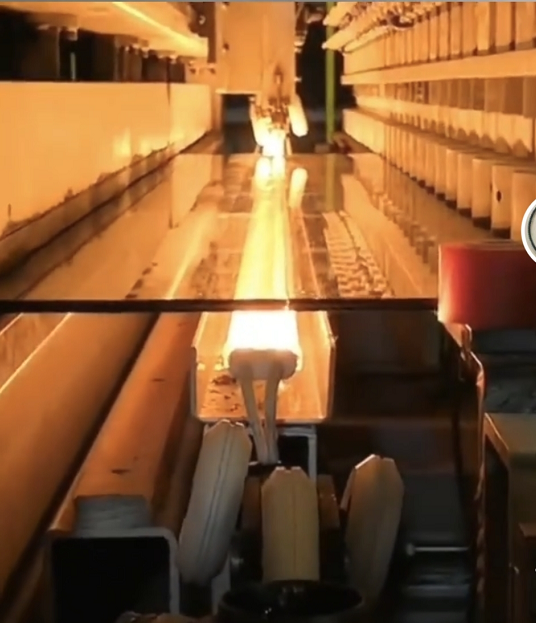
We lean on short-wave infrared (SWIR) heating, tuned to how sealant and glass behave thermally. SWIR penetrates quickly and heats the interface directly, instead of dumping energy into the air and the machine. The payoff is a fast ramp with low thermal inertia—exactly what you need when you’re running short cycles and a tight cure window. The spec is straightforward: high power density delivered with tight temperature control. In practice, that means the module comes up to operating temp in minutes, recovers fast after a sheet change, and holds the setpoint steadily across the entire sealant bead. We design the heating field to be uniform at the edge, because uneven heat is what drives thermal stress and cure inconsistency—both of which bleed yield. We size the module to match your line’s demand, with configurations that fit common IGU sealing machines and edge-seal heating positions. The connections are industrial—solid terminals, shielded wiring, and a clean thermal interface plan so installation is repeatable on the floor. Control interfaces play nice with standard machine controls, so you can integrate heating start, dwell, and safety interlocks without re-engineering the whole line.
Why this approach holds up in production
Insulating glass sealing is all about time and temperature. The primary sealant needs the right heat to flow and wet properly; the secondary needs a controlled cure to build adhesion without stressing the edge. Slow heat stretches the cycle. Inconsistent heat gives you weak spots and drift. This module shortens the ramp and steadies the dwell. That means more consistent sealant properties from the first IGU to the thousandth, and fewer rejects from under-cure, bubbles, or adhesion failure at the edge. On high-throughput lines, the fast recovery keeps the station busy instead of waiting. Energy use is where the design earns its keep. High power doesn’t have to mean high waste. SWIR concentrates energy where it matters—at the sealant and glass interface—cutting losses to convection and radiation into the surroundings. In many lines, that focus lowers the per-IGU energy cost of sealing, because you’re heating the target, not the room. The operational savings show up fast:
- Cycle time drops by trimming heat-up and hold.
- Energy per unit falls because you’re not heating empty space.
- Maintenance interruptions shrink, since the module is built for repeated thermal cycling, not occasional use. When you’re running 8 to 24 hours a day, the difference shows up on the electricity bill and in uptime.
What to watch for
Installation is simple, but thermal planning matters. The module has to be aligned to the sealant path, and the distance to the glass set so you get uniform heating without hot spots. If you run coated glass or low-emissivity (low-E) products, emissivity changes how the surface absorbs infrared. In those cases, we set the heating profile to hold edge temperature without overdriving the module. Compatibility is practical. The module is designed to integrate into existing IGU sealing equipment, but mounting, airflow, and guarding can vary by machine. Before you finalize, confirm the available space, the service access you’ll need, and the control wiring at the heating station. One constraint is real: high-power heating delivers speed, and speed needs stable power. The module pulls significant current during the ramp, so the supply and wiring must be sized to handle peak load without voltage drop. If your plant has older distribution or shared circuits, plan the electrical work up front—otherwise, the module will work, but it won’t hit its designed pace. If you’re chasing consistent IGU edge seal quality and lower operating cost, start by measuring heat-up time, dwell stability, and per-unit energy at the sealing station. Then run a matched module on the same line. The numbers tell the story faster than any spec sheet.